.jpeg)
An Arkansas Blankland Sunrise
I cannot believe it has been almost a full year since I last contributed to Horticulture in Arkansas. Regardless of that lost time, my plant safaris have yet to cease. I am constantly peering through shaded woodlands, hoping to find a eye-catching splash of color or a bizarre leaf mixed-in with the vast canvas of green. Recently, I traveled to Southwest Arkansas to spend sometime in one of Arkansas' beautiful wetlands, next to the brand new Turk Coal Plant. Regardless of the smell of sulfur and the constant noise from the power plant, the power plant is incredibly environmentally friendly - it even feeds the birds. (Note the sarcasm.) Once I arrived at Grassy Lake, I was greeted by a Broad-headed skink. Some people believe that skinks are poisonous. Regardless of what you might think, that is almost not true. Have you ever seen the common Blue-tailed skink? Well, if you see him, do not eat him. His blue tail is poisonous when digested.

Plestiodon laticeps
After unpacking and getting settled in, my wife and I decide to go on a little hike through the woods. Aesculus pavia was in full bloom. The enticing red flowers covered the hardwood forests. However, I did noticed something a little out of place. I have seen these small trees through the Ozarks and Ouachita Mountains, but not in the blackland forests. There standing amongst all the other Red Buckeyes, was a single white flowered buckeye, the Ohio Buckeye.
.jpeg)
Aesculus glabra
One common understory plant that caught our eye is the Mayapple. The foliage is the most eye-catching aspect of this little ground cover. The broad, lush-green leaves pop out out the forest floor from thick rhizomes, uncurling to soak up as much sun as possible before the trees choke out the light. Angela noticed the aroma before I did, most likely because she has super-human senses. But wow, the little flowers from the Mayapple do provide a nice "howdya-do" to our noses. They can almost go unnoticed if you're not careful. Also, remember where you find these plants and return later. The fruit is edible only when they turn yellow. If you can beat the wildlife, it might make a nice little snack.
.jpeg)
Podophyllum peltatum
Further down the trail we spotted a fiery red flower in the distance. Oh, they colored the area with their grandiosity! Nothing screams "Hey! Look at me!" like these native Fire Pinks. These are some of the Hummingbird's favorite early flowers. And together with the Red Buckeye, a full course meal awaits our tiny flying friends. This would be a great addition to any wildflower garden, but only if the gardener wants to attract lots of birds and butterflies.

Silene virginica
At the top of one of the small hills in the area, a familiar growth was emerging from dormant crown buds. I could recognize that it was a kind of Baptisia, but which one? Last weekend, I returned to discover that the flower color was, drum-roll please, yellow. That's right, Yellow Wild Indigo. The native is not as impressive as some of the new cultivars available at nurseries and garden centers. However, it is always nice to see a familiar corolla now and then.
.jpeg)
baptisia sphaerocarpa
January 3, 4 - Quadrantids Meteor Shower. The Quadrantids are an above average shower, with up to 40 meteors per hour at their peak. The shower usually peaks on January 3 & 4, but some meteors can be visible from January 1 - 5. The near first quarter moon will set shortly after midnight, leaving dark skies for what should be a good show. Best viewing will be from a dark location after midnight. Look for meteors radiating from the constellation Bootes.
February 20 - March 12 - Best Chance to see Mercury. The planet Mercury will be far enough from the Sun's glare to be visible shortly after sunset. Mercury will reach greatest elongation from the Sun on March 5, reaching a relatively bright magnitude of about -1. This will be your best chance to see the planet this year.
March 3 - Mars at Opposition. The red planet will be at its closest approach to Earth and its face will be fully illuminated by the Sun. This is the best time to view and photograph Mars.
March 14 - Conjunction of Venus and Jupiter. The two brightest planets in the sky will be within 3 degrees of each other in the evening sky. On March 25 and 25, the crescent Moon will be near the two planets, creating a dazzling evening spectacle.
March 20 - March Equinox. The March equinox occurs at 05:14 UTC. The Sun will shine directly on the equator and there will be nearly equal amounts of day and night throughout the world. This is also the first day of spring (vernal equinox) in the northern hemisphere and the first day of fall (autumnal equinox) in the southern hemisphere.
April 15 - Saturn at Opposition. The ringed planet will be at its closest approach to Earth and its face will be fully illuminated by the Sun. This is the best time to view and photograph Saturn and its moons.
April 21, 22 - Lyrids Meteor Shower. The Lyrids are an average shower, usually producing about 20 meteors per hour at their peak. These meteors can produce bright dust trails that last for several seconds. The shower usually peaks on April 21 & 22, although some meteors can be visible from April 16 - 25. With no moon to get in the way this year, this really should be a good show. Look for meteors radiating from the constellation of Lyra after midnight.
April 28 - Astronomy Day Part 1. Astronomy Day is an annual event intended to provide a means of interaction between the general public and various astronomy enthusiasts, groups and professionals. The theme of Astronomy Day is "Bringing Astronomy to the People," and on this day astronomy and stargazing clubs and other organizations around the world will plan special events. You can find out about special local events by contacting your local astronomy club or planetarium. You can also find more about Astronomy Day by checking the Web site for the Astronomical League.
May 5, 6 - Eta Aquarids Meteor Shower. The Eta Aquarids are a light shower, usually producing about 10 meteors per hour at their peak. The shower's peak usually occurs on May 5 & 6, however viewing should be good on any morning from May 4 - 7. The full moon will probably ruin the show this year, washing out all but the brightest meteors with its glare. The radiant point for this shower will be in the constellation Aquarius. Best viewing is usually to the east after midnight, far from city lights.
May 6 - Full Moon. The Moon will be directly opposite the Earth from the Sun and will be fully illuminated as seen from Earth. This phase occurs at 03:35 UTC. The Moon will be at its closest point to the Earth, so this will be the largest full moon of the year.
May 20 - Annular Solar Eclipse. The path of annularity will begin in southern China and move east through Japan, the northern Pacific Ocean, and into the western United States. A partial eclipse will be visible throughout parts of eastern Asia and most of North America. (NASA Map and Eclipse Information)
June 4 - Partial Lunar Eclipse. The eclipse will be visible throughout most of Asia, Australia, the Pacific Ocean, and the Americas. (NASA Map and Eclipse Information)
June 5, 6 - Transit of Venus Across the Sun. This extremely rare event will be entirely visible throughout most of eastern Asia, eastern Australia, and Alaska. A partial transit can be seen in progress at sunrise throughout Europe, western Asia, and eastern Africa. A partial transit can be seen in progress at sunset throughout most of North America, Central America, and western South America. The next transit will not take place until the year 2117. (NASA Transit Information | NASA Transit Map)
June 20 - June Solstice. The June solstice occurs at 23:09 UTC. The North Pole of the earth will be tilted toward the Sun, which will have reached its northernmost position in the sky and will be directly over the Tropic of Cancer at 23.44 degrees north latitude. This is the first day of summer (summer solstice) in the northern hemisphere and the first day of winter (winter solstice) in the southern hemisphere.
July 28, 29 - Southern Delta Aquarids Meteor Shower. The Delta Aquarids can produce about 20 meteors per hour at their peak. The shower usually peaks on July 28 & 29, but some meteors can also be seen from July 18 - August 18. The radiant point for this shower will be in the constellation Aquarius. The near first quarter moon will set shortly after midnight, leaving dark skies for what should be a good show. Best viewing is usually to the east after midnight.
August 6 - Curiosity Rover at Mars. NASA’s Mars Science Laboratory (MSL) is scheduled to land on the red planet between August 6 and August 20, 2012. Officially named Curiosity, it is an autonomous rover similar to the Spirit and Opportunity rovers that previously visited Mars. This much larger rover will carry many more instruments and experiments than its previous cousins. Curiosity’s high definition color cameras will photograph the Martian surface while a host of instruments will sample the soil and air and search for organic compounds.
August 11, 12 - Perseids Meteor Shower. The Perseids is one of the best meteor showers to observe, producing up to 60 meteors per hour at their peak. The shower's peak usually occurs on August 11 & 12, but you may be able to see some meteors any time from July 23 - August 22. The radiant point for this shower will be in the constellation Perseus. The near last quarter moon will be hanging around for the show, but shouldn’t be too much of a problem for a shower with up to 60 meteors per hour. Find a location far from city lights and look to the northeast after midnight.
August 24 - Neptune at Opposition. The blue planet will be at its closest approach to Earth and its face will be fully illuminated by the Sun. This is the best time to view Neptune. Due to its distance, it will only appear as a tiny blue dot in all but the most powerful telescopes.
August 31 - Full Moon. The Moon will be directly opposite the Earth from the Sun and will be fully illuminated as seen from Earth. This phase occurs at 13:58 UTC. Since this is the second full moon in the same month, it is known as a blue moon. This rare calendar event only happens once every few years, giving rise to the term, “once in a blue moon.”
September 22 - September Equinox. The September equinox occurs at 14:49 UTC. The Sun will shine directly on the equator and there will be nearly equal amounts of day and night throughout the world. This is also the first day of fall (autumnal equinox) in the northern hemisphere and the first day of spring (vernal equinox) in the southern hemisphere.
September 29 - Uranus at Opposition. The blue-green planet will be at its closest approach to Earth and its face will be fully illuminated by the Sun. This is the best time to view Uranus. Due to its distance, it will only appear as a tiny blue-green dot in all but the most powerful telescopes.
October 20 - Astronomy Day Part 2. Astronomy Day is an annual event intended to provide a means of interaction between the general public and various astronomy enthusiasts, groups and professionals. The theme of Astronomy Day is "Bringing Astronomy to the People," and on this day astronomy and stargazing clubs and other organizations around the world will plan special events. You can find out about special local events by contacting your local astronomy club or planetarium. You can also find more about Astronomy Day by checking the Web site for the Astronomical League.
October 20, 21 - Orionids Meteor Shower. The Orionids is an average shower producing about 20 meteors per hour at their peak. This shower usually peaks on the 21st, but it is highly irregular. A good show could be experienced on any morning from October 20 - 24, and some meteors may be seen any time from October 17 - 25. The first quarter moon will set by midnight, leaving a dark sky for what should be a good show. Best viewing will be to the east after midnight. Be sure to find a dark location far from city lights.
November 13 - Total Solar Eclipse. The path of totality will only be visible in parts of extreme northern Australia and the southern Pacific Ocean. A partial eclipse will be visible in most parts of eastern Australia and New Zealand.
(NASA Map and Eclipse Information)
November 17, 18 - Leonids Meteor Shower. The Leonids is one of the better meteor showers to observe, producing an average of 40 meteors per hour at their peak. The shower itself has a cyclic peak year every 33 years where hundreds of meteors can be seen each hour. The last of these occurred in 2001. The shower usually peaks on November 17 & 18, but you may see some meteors from November 13 - 20. The crescent moon will set early in the evening leaving dark skies for what should be an excellent show. Look for the shower radiating from the constellation Leo after midnight, and be sure to find a dark location for viewing.
November 27 - Conjunction of Venus and Saturn. These two bright planets will be within 1 degree of each other in the morning sky. Look to the east around sunrise.
November 28 - Penumbral Lunar Eclipse. The eclipse will be visible throughout most of Europe, eastern Africa, Asia, Australia, the Pacific Ocean, and North America. (NASA Map and Eclipse Information)
December 3 - Jupiter at Opposition. The giant planet will be at its closest approach to Earth and its face will be fully illuminated by the Sun. This is the best time to view and photograph Jupiter and its moons.
December 13, 14 - Geminids Meteor Shower. Considered by many to be the best meteor shower in the heavens, the Geminids are known for producing up to 60 multicolored meteors per hour at their peak. The peak of the shower usually occurs around December 13 & 14, although some meteors should be visible from December 6 - 19. The radiant point for this shower will be in the constellation Gemini. This year the new moon will guarantee a dark sky for what should be an awesome show. Best viewing is usually to the east after midnight from a dark location.
December 21 - December Solstice. The December solstice occurs at 11:12 UTC. The South Pole of the earth will be tilted toward the Sun, which will have reached its southernmost position in the sky and will be directly over the Tropic of Capricorn at 23.44 degrees south latitude. This is the first day of winter (winter solstice) in the northern hemisphere and the first day of summer (summer solstice) in the southern hemisphere.
At times there were between 30 and 50 hummingbirds swarming the feeder. All of them were competing for a spot for a cool sugary drink. I was amazed how close I could get with them. At times i could hold the feeder in my hands and the birds were not deterred. Very exciting!
Recently, I was given a taxonomical key - Thanks Angela! What a fantastic resource to have if you are a horticulturist like me. I don't know how I ever got along without one for such a long time.
Just the other day I was checking on the cider orchard. I noticed in the distance, beautiful pink flowers dripping down the slopes next to the dirt road. I've seen these plants before, and had simply assumed them to be a kind of locust. But with my new book I could explore all the details of this plant and provide this beautiful specimen with a proper name.

And for your viewing pleasure, I snapped a photo of some huge asparagus growing very close to the cider apple trees! Yummmmmmmm!


An unusual member of the spleenwort family, the Walking Fern can produce new plants at the end of its leaves! My father and I came across many of these ferns while hiking the Buffalo River Trail.
During the fall of 2010, the work crew at Compton Gardens set off to explore and study some of the beauty in Arkansas' natural forests. The destination was Lost Valley State Park. At arrival, I considered this place to be a typical hike, easy and ruined by too many visitors. Then I noticed the Hepatica nobilis Schreb. var. acuta carpeting the forest floor on both sides of the walking path. My original opinion of the place instantly melted into pure excitement. Not far into the trail, we also noticed several spent orchids! This place must be visited in spring to view this impressive flora.
The most impressive feature of this area are the ancient American Beech trees, Fagus grandifolia. As my friends keep their eyes on the floor, my head is constantly tilted back staring at the trees' knobby branches, twisting above my head, covered in those amber fall leaves. From my time spent in the Buffalo National River area, I have falling in love with the American Beech.

Toward the end of the trail, past the big waterfall and near the mouth of the cave, we discovered something camouflaged among the moss and fallen leaves. We studied these non-photosynthetic plants desperately. Once we returned to civilization with our many photographs, we cracked our books. We found Epifagus virginiana, Beech Drops. Beech Drops love to feed from the roots of the American Beech, hence the lack of chlorophyll. This plant is also known as Cancer-Root; it was once said to cure cancer, but that isn't true. However, it does hold some medical uses. If you are interested in reading more click here.


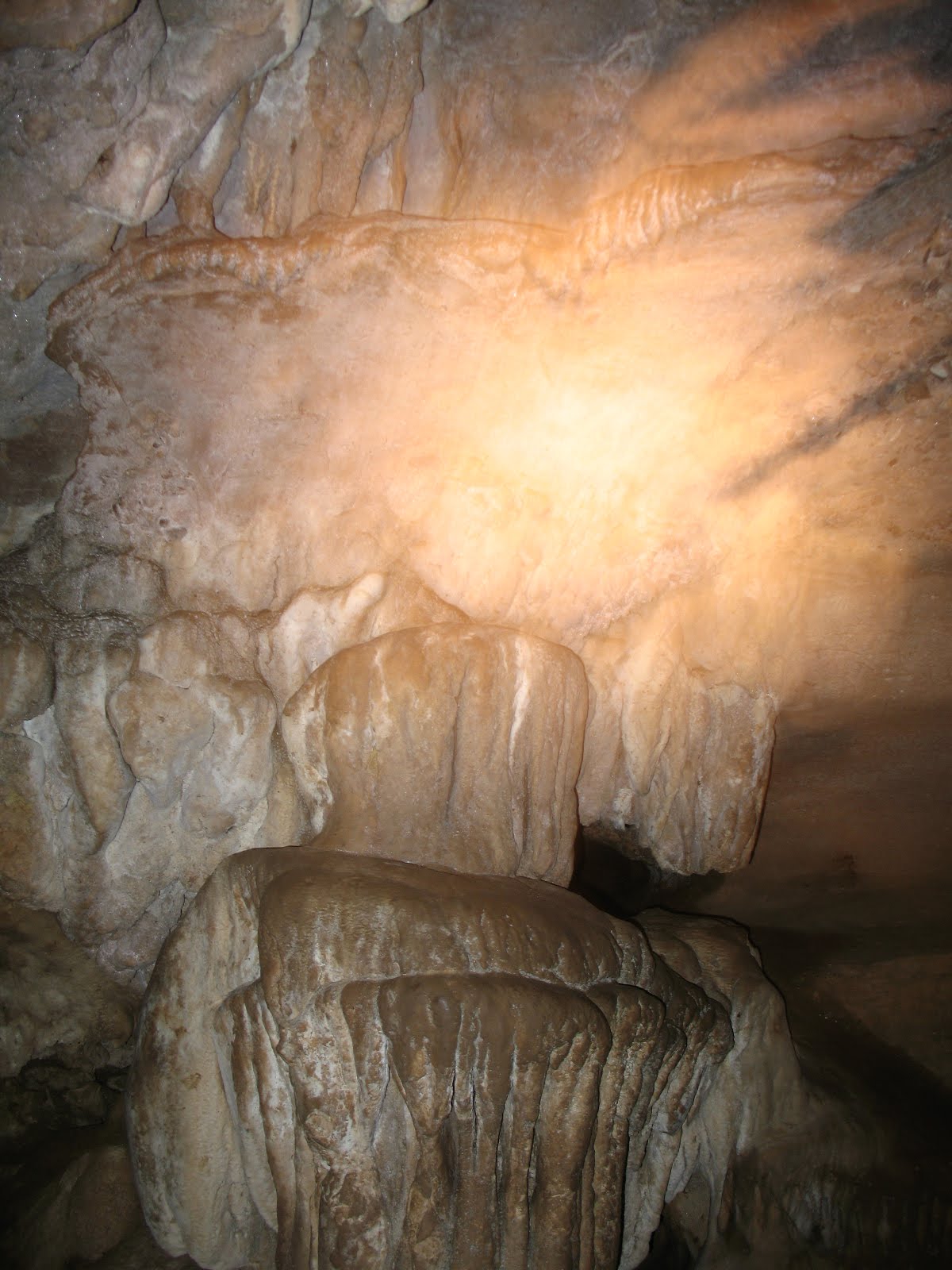
After we moved on from the Beech Drops we slipped into the darkness of the cave at the end of the trail. As we entered the cave, I felt a rush of cold air down my neck. It felt as if someone was following us into the cave. To get to the chamber at the end, you must pass through the very tight hallway. Jose, one member of our team, lost his footing and broke his ankle. I stayed with him while the others went to get help. We sat in silence for what felt like hours. At one point it seemed that the shadows cast by the light of my headlight were moving. One of them was actually moving! It wasn't my light, it was the shadow! I scrambled to get away from the approaching figure. I heard Jose's voice sound as if he was being crushed by rocks. When I turned to look, he was gone. The shadows had receded. Fun story, huh? Of course, Jose is fine. He was never hurt.


January 4 - Partial Solar Eclipse. The partial eclipse will be visible in most parts of northern Africa, Europe, and Asia. (NASA Map and Eclipse Information)
March 20 - The March Equinox occurs at 23:21 UTC. The Sun will shine directly on the equator and there will be nearly equal amounts of day and night throughout the world. This is also the first day of spring (vernal equinox) in the northern hemisphere and the first day of fall (autumnal equinox) in the southern hemisphere.
April 3 - Saturn at Opposition. The ringed planet will be at its closest approach to Earth and its face will be fully illuminated by the Sun. This is the best time to view and photograph Saturn and its moons.
April 21, 22 - Lyrids Meteor Shower. The Lyrids are an average shower, usually producing about 20 meteors per hour at their peak. These meteors can produce bright dust trails that last for several seconds. The shower usually peaks on April 21 & 22, although some meteors can be visible from April 16 - 25. This year, the gibbous moon will hide most of the fainter meteors in its glare. Look for meteors radiating from the constellation of Lyra after midnight, and be sure to find a dark viewing location far from city lights.
May 5, 6 - Eta Aquarids Meteor Shower. The Eta Aquarids are a light shower, usually producing about 10 meteors per hour at their peak. The shower's peak usually occurs on May 5 & 6, however viewing should be good on any morning from May 4 - 7. A thin, crescent moon will set early in the evening leaving dark skies for what could be an good show. The radiant point for this shower will be in the constellation Aquarius. Best viewing is usually to the east after midnight, far from city lights.
June 1 - Partial Solar Eclipse. The partial eclipse will be visible in most parts eastern Asia, Alaska, northern Canada, and Greenland. (NASA Map and Eclipse Information)
June 15 - Total Lunar Eclipse. The eclipse will be visible throughout most of South America, Europe, Africa, Asia, and Australia. (NASA Map and Eclipse Information)
June 21 - The June solstice occurs at 17:16 UTC. The North Pole of the earth will be tilted toward the Sun, which will have reached its northernmost position in the sky and will be directly over the Tropic of Cancer at 23.44 degrees north latitude. This is the first day of summer (summer solstice) in the northern hemisphere and the first day of winter (winter solstice) in the southern hemisphere.
July 1 - Partial Solar Eclipse. This partial eclipse will only be visible off the coast of Antarctica. (NASA Map and Eclipse Information)
July 28, 29 - Southern Delta Aquarids Meteor Shower. The Delta Aquarids can produce about 20 meteors per hour at their peak. The shower usually peaks on July 28 & 29, but some meteors can also be seen from July 18 - August 18. The radiant point for this shower will be in the constellation Aquarius. This year the thin, crescent moon will be hanging around for the show, but it shouldn’t cause too many problems. Best viewing is usually to the east after midnight from a dark location.
August 12, 13 - Perseids Meteor Shower. The Perseids is one of the best meteor showers to observe, producing up to 60 meteors per hour at their peak. The shower's peak usually occurs on August 13 & 14, but you may be able to see some meteors any time from July 23 - August 22. The radiant point for this shower will be in the constellation Perseus. The full moon will definitely be a problem this year, hiding the fainter meteors with its glare. But with up to 60 meteors per hour possible, it could still be a great show. Find a location far from city lights and look to the northeast after midnight.
August 22 - Neptune at Opposition. The blue planet will be at its closest approach to Earth and its face will be fully illuminated by the Sun. This is the best time to view Neptune. Due to its distance, it will only appear as a tiny blue dot in all but the most powerful telescopes.
September 23 - The September equinox occurs at 09:05 UTC. The Sun will shine directly on the equator and there will be nearly equal amounts of day and night throughout the world. This is also the first day of fall (autumnal equinox) in the northern hemisphere and the first day of spring (vernal equinox) in the southern hemisphere.
September 25 - Uranus at Opposition.The blue-green planet will be at its closest approach to Earth and its face will be fully illuminated by the Sun. This is the best time to view Uranus. Due to its distance, it will only appear as a tiny blue-green dot in all but the most powerful telescopes.
October 21, 22 - Orionids Meteor Shower. The Orionids is an average shower producing about 20 meteors per hour at their peak. This shower usually peaks on the 21st, but it is highly irregular. A good show could be experienced on any morning from October 20 - 24, and some meteors may be seen any time from October 17 - 25. The nearly last quarter moon may hide some of the faintest meteors this year. Best viewing will be to the east after midnight. Be sure to find a dark location far from city lights.
October 29 - Jupiter at Opposition. The giant planet will be at its closest approach to Earth and its face will be fully illuminated by the Sun. This is the best time to view and photograph Jupiter and its moons. The giant planet will be a big and bright as it gets in the night sky. A medium-sized telescope should be able to show you some of the details in Jupiter's cloud bands. A good pair of binoculars should allow you to see Jupiter's four largest moons, appearing as bright dots on either side of the planet.
November 17, 18 - Leonids Meteor Shower. The Leonids is one of the better meteor showers to observe, producing an average of 40 meteors per hour at their peak. The shower itself has a cyclic peak year every 33 years where hundreds of meteors can be seen each hour. The last of these occurred in 2001. The shower usually peaks on November 17 & 18, but you may see some meteors from November 13 - 20. The nearly last quarter moon may hide some of the faintest meteors this year, but this should still be an excellent show. Look for the shower radiating from the constellation Leo after midnight.
November 25 - Partial Solar Eclipse. This partial eclipse will only be visible over Antarctica and parts of South Africa and Tasmania. (NASA Map and Eclipse Information)
December 10 - Total Lunar Eclipse. The eclipse will be visible throughout most of Europe, eastern Africa, Asia, Australia, the Pacific Ocean, and the North America. (NASA Map and Eclipse Information)
December 13, 14 - Geminids Meteor Shower. Considered by many to be the best meteor shower in the heavens, the Geminids are known for producing up to 60 multicolored meteors per hour at their peak. The peak of the shower usually occurs around December 13 & 14, although some meteors should be visible from December 6 - 19. The radiant point for this shower will be in the constellation Gemini. The gibbous moon will definitely interfere this year by hiding the faintest meteors, but with up to 60 meteors per hour possible, this should still be an excellent show. Best viewing is usually to the east after midnight from a dark location.
December 21 - The December solstice occurs 05:30 UTC. The South Pole of the earth will be tilted toward the Sun, which will have reached its northernmost position in the sky and will be directly over the Tropic of Capricorn at 23.44 degrees south latitude. This is the first day of winter (winter solstice) in the northern hemisphere and the first day of summer (summer solstice) in the southern hemisphere.

This photo was taken during the fall of 2010 in the White Rock National Forest. This is not an uncommon caterpillar; however, the shape and color provides excellent camouflage from predators. Some people believe that the hairs covering the caterpillar will sting. That isn't quite true. There might be a few circumstances that a person might develop a very slight reaction, but nothing serious.
Orange Tube-Like Horn-Like Stinky Fungus aka. Stinkhorn
2 comments Posted by John Gardner at 12:23 PMI have often seen these stinky mushrooms popping out of recently mulched gardens; however, I've never taken the time to get to know them properly until now. 
This silly mushroom is a stinkhorn from the Mutinus genus. I did some research to discover the species and I've narrowed it down to M. caninus or M. elegans. The best way to differentiate between these two species is the position and length of the spore slime (the stuff that looks like poop). The problem is that my spore slime seems to have been disturbed. 
If you haven't noticed, I did get very close to these mushrooms. The smell is very thick and not very appetizing, at least to humans. I noticed many gnats and flies running around the sticky, brown slime. They do eat it, but they also get the slime stuck to their feet. For a mushroom, that's a pretty ingenious way to spread spores.
For more information on stickhorns check out MushroomExpert.com
Plant Sale & National Public Gardens Day at Compton Gardens, Bentonville, Arkansas
2 comments Posted by John Gardner at 7:20 PM
Hello all you plant enthusiasts! You will be happy to know that there is a native plant sale coming this weekend [ 05/08/2010 ] at Compton Gardens, located near downtown Bentonville, Arkansas. They will be offering great flowering and fruiting native trees, shrubs, and beautiful perennial flowers. Some of my favorites on the list will include Cladrastis kentukea, Ribes aureum, Euonymus americanus and many others. For more information about the plant sale and the National Public Gardens Day, just CLICK HERE.
If you want to know how to get to the garden, click here. Be sure and enter on Main Street. Sometimes that area can be a bit confusing.
I will be giving a short walk through the Bird Sanctuary, for the National Gardens Day on Friday. I'm very excited. Hope to see you there.
Arkansas Orchids: Lady Slipper, Showy Orchis, & Spring Coralroot
1 comments Posted by John Gardner at 2:35 PMIf you are a plant geek, you're going to love these rare beauties...


The Spring Coralroot is a very interesting orchid. It is a nonphotosynthesizing orchid. It is able to take up nutrition from mycorrhizal fungus. Pretty cool, huh? Also back in the good ol' days, this plant was used to assist in breaking high fever and used as a mild sedative. But do not go out looking for this plant for that reason. Corallorrhiza is a rare plant and its habitat should be left alone!

Are you a fan of Pawpaw trees? If not, you should be. These trees are not only aesthetically pleasing but also wonderful to eat. Many people compare the taste to banana. I admit, it does have a tropical essence; however, it has more of a Papaya and Mango combination with some banana mixed in. 
Add one of these trees to your landscape not only for your personal gain but also for the Zebra Swallowtail Butterfly. This is the only plant that the Zebra Swallowtail will use as a host.

Most Pawpaws are not well pollinated. This can be for several reasons. First pollinators like the flies, beetles and ants do not pick up the faint smell of the flowers. Some people can boost pollination by attracting the insects using rotten food or your neighbors dead "yip-yip" dog should work fine. If you are able to endure the smell, expect delicious fruits in the late summer. Second, cross pollination between trees will boost the yield. So be sure and plant several Pawpaw trees. These trees tend to form in thickets, so expect more to pop up as the years go by.


I was enjoying a nice visit with my family the moment I received a telephone call from my dear friend Amanda. She reminded me of a time last year when she discovered morels outside of her apartment (click to view photos). There was a moment of silence over the line. Of course, she found more at her new apartment! Fungus seems to follow her where ever she goes - I'm not so sure that's a good thing. However, Silvia and I were invited to a wonderful morel pasta dinner.

After the first bite, I quizzed my taste buds searching for something that would blow my mind. But however delicious the fungus is, I will have to agree with my father's words, "A mushroom is a mushroom." Now that I think about it, I do remember a particular fungus that passed through John Gardner years ago. The fungus was called black fungus. The black jelly like fungus was revealed to me at an Asian restaurant in Ptuj, Slovenia. If I recall, it is tasty but the texture is bizarre and the black stains the teeth.


Here are some nice spring flowers I simply wanted to share with you. These flowers you will not typically find in the neighbors garden. You'll have better luck finding these on the trail. Good luck!


January 3, 4 - Quadrantids Meteor Shower. The Quadrantids are an above average shower, with up to 40 meteors per hour at their peak. The shower usually peaks on January 3 & 4, but some meteors can be visible from January 1 - 5. Best viewing will be from a dark location after midnight. Look for meteors radiating from the constellation Bootes.
January 15 - Annular Solar Eclipse. The path of annularity will begin in central Africa and move east through the Indian Ocean, southern India, Sri Lanka, Malymar, and China. A partial eclipse will be visible throughout most eastern Africa and Asia. (NASA Map and Eclipse Information | NASA Eclipse Animation)
January 29 - Mars at Opposition. The red planet will be at its closest approach to Earth and its face will be fully illuminated by the Sun. This is the best time to view and photograph Mars.
March 20 - The Vernal Equinox occurs in the northern hemisphere at 17:32 UT. There will be equal amounts of day and night. This is also the first day of spring.
March 22 - Saturn at Opposition. The ringed planet will be at its closest approach to Earth. This is the best time to view and photograph Saturn and its moons. Saturn's rings will be nearly edge-on this year and will be very difficult to see.
April 21, 22 - Lyrids Meteor Shower. The Lyrids are an average shower, usually producing about 20 meteors per hour at their peak. These meteors can produce bright dust trails that last for several seconds. The shower usually peaks on April 21 & 22, although some meteors can be visible from April 16 - 25. Look for meteors radiating from the constellation of Lyra after midnight.
May 5, 6 - Eta Aquarids Meteor Shower. The Eta Aquarids are a light shower, usually producing about 10 meteors per hour at their peak. The shower's peak usually occurs on May 5 & 6, however viewing should be good on any morning from May 4 - 7. The radiant point for this shower will be in the constellation Aquarius. Best viewing is usually to the east after midnight.
June 21 - The Summer Solstice occurs in the northern hemisphere at 11:28 UT. The Sun is at its highest point in the sky and it will be the longest day of the year. This is also the first day of summer.
June 26 - Partial Lunar Eclipse. The eclipse will be visible throughout most of eastern Asia, Australia, the Pacific Ocean, and the western Americas. (NASA Eclipse Information)
July 11 - Total Solar Eclipse. The path of totality will only be visible in the southern Pacific Ocean, Easter Island, and parts of southern Chile and Argentina. A partial eclipse will be visible in many parts of southern South America. (NASA Map and Eclipse Information | NASA Eclipse Animation)
July 28, 29 - Southern Delta Aquarids Meteor Shower. The Delta Aquarids can produce about 20 meteors per hour at their peak. The shower usually peaks on July 28 & 29, but some meteors can also be seen from July 18 - August 18. The radiant point for this shower will be in the constellation Aquarius. Best viewing is usually to the east after midnight.
August 12, 13 - Perseids Meteor Shower. The Perseids is one of the best meteor showers to observe, producing up to 60 meteors per hour at their peak. The shower's peak usually occurs on August 13 & 14, but you may be able to see some meteors any time from July 23 - August 22. The radiant point for this shower will be in the constellation Perseus. Look to the northeast after midnight.
August 20 - Neptune at Opposition. The blue planet will be at its closest approach to Earth. This is the best time to view Neptune, although it will only appear as a tiny blue dot in all but the most powerful telescopes.
September 21 - Jupiter at Opposition. The giant planet will be at its closest approach to Earth. This is the best time to view and photograph Jupiter and its moons.
September 22 - Uranus at Opposition. The blue-green planet will be at its closest approach to Earth. This is the best time to view Uranus, although it will only appear as a tiny blue-green dot in all but the most powerful telescopes.
September 23 - The Autumnal Equinox occurs in the northern hemisphere at 03:09 UT. There will be equal amounts of day and night. This is also the first day of fall.
October 21, 22 - Orionids Meteor Shower. The Orionids is an average shower producing about 20 meteors per hour at their peak. This shower usually peaks on the 21st, but it is highly irregular. A good show could be experienced on any morning from October 20 - 24, and some meteors may be seen any time from October 17 - 25. Best viewing will be to the east after midnight.
November 17, 18 - Leonids Meteor Shower. The Leonids is one of the better meteor showers to observe, producing an average of 40 meteors per hour at their peak. The shower itself has a cyclic peak year every 33 years where hundreds of meteors can be seen each hour. The last of these occurred in 2001. The shower usually peaks on November 17 & 18, but you may see some meteors from November 13 - 20. Look for the shower radiating from the constellation Leo after midnight.
December 13, 14 - Geminids Meteor Shower. Considered by many to be the best meteor shower in the heavens, the Geminids are known for producing up to 60 multicolored meteors per hour at their peak. The peak of the shower usually occurs around December 13 & 14, although some meteors should be visible from December 6 - 19. The radiant point for this shower will be in the constellation Gemini. Best viewing is usually to the east after midnight.
December 21 - Total Lunar Eclipse. The eclipse will be visible throughout most of eastern Asia, Australia, the Pacific Ocean, the Americas, and Europe. (NASA Eclipse Information)
December 21 - The Winter Solstice occurs in the northern hemisphere at 23:38 UT. The Sun is at its lowest point in the sky and it will be the shortest day of the year. This is also the first day of winter.
This morning, I came across some sticks from an old oak tree. What I found captivated the "photographer" within.


Winter can be a difficult time for most gardeners. It's considered to be an off season - washing containers, checking equipment, and other random tasks. What projects could I do to add some winter interest to my garden? Start with something simple like bird feeders. Before installing your bird feeder, consider the location. Place the feeder away from high traffic areas, including cars and pedestrians; near to an area of cover like bamboo or an evergreen; and near a source of water. After getting your bird feeder to the best possible spot, it is time to pick up some feed. During the winter birds are interested in gaining some serious fat. So provide them with feed that is high in protein.
Another thing you could add to your project is a bird bath. At Compton Gardens we decided to create our own bird bath using trunks of fallen trees and a chainsaw. After scooping out the bowl, we added a mossy rock (for a landing pad), and some plants to give it a natural, living aesthetic.


After doing these few things at our garden, the result has been dramatic. I've counted 15 or more species of birds at a time in the area providing a winter garden with an abundance of color.


My favorite time of the year is harvest! That's the time when the apples are ready to be picked for cider making.

I searched for apple varieties like Arkansas Black, Enterprise, Gold Rush, Ben Davis, Falawater, Lady, and Newton Pippin. The apple blend resulted in a high sugar, however low tannin, cider. The older varieties of apples were not as plentiful to have an impact on the dryness of this year's drink.
As for equipment, I purchased a 1/2 horsepower garbage disposal to use as a grinder. It worked well; however, it did overheat a few times as it was powering through 3 1/2 bushels of apples. For the second year in a row, we used our hands to press the mash rather than a machine. I haven't quite had the time or resources to build a proper press.


Subscribe To


 Posts
All Comments
Posts
All Comments
